


The technology behind
every ACME machine.
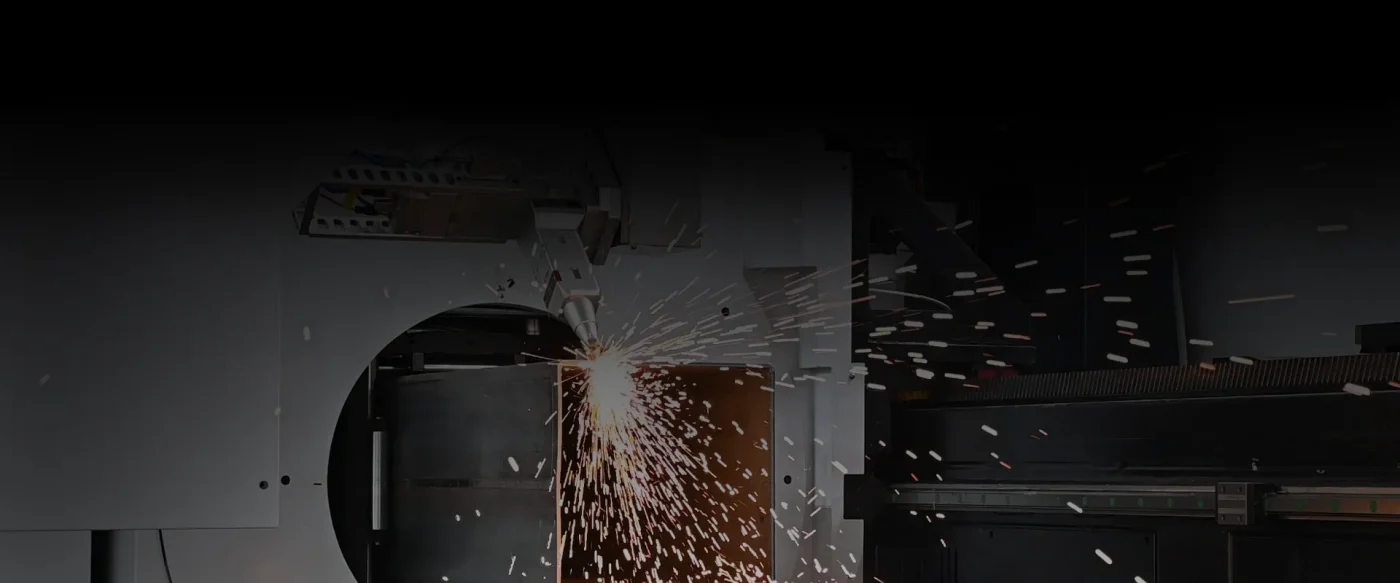
For anyone choosing a tube and profile cutting machine, this page explains the technology developed by ACME: the heavy-duty, full-stroke chuck, the 3- and 4-chuck configurations, ±45° bevel cutting, the control system developed with Bochu, and static cutting.
The ACME chuck system
Heavy-duty full-stroke chuck
The chuck is one of the core components of a tube cutting machine. Its clamping force, rotation speed and control determine how much the machine can handle.
The chuck developed by ACME is a pneumatic, full-stroke design: it clamps across its entire range without changing jaws, which saves production time. It can hold metal tubes and profiles weighing up to 4 tonnes and up to 15 metres long. With eight cylinders, it has twice the clamping force of a standard chuck.
It is precise, responds quickly, handles heavy tubes, runs stably and is well protected against dust. Every chuck and each of its components has its own identification number, so the machine can still be repaired after years of use.
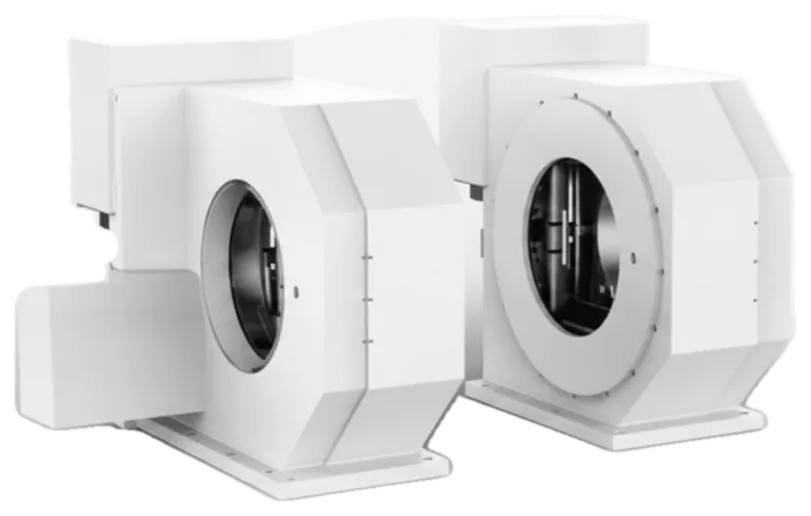
Chuck 550
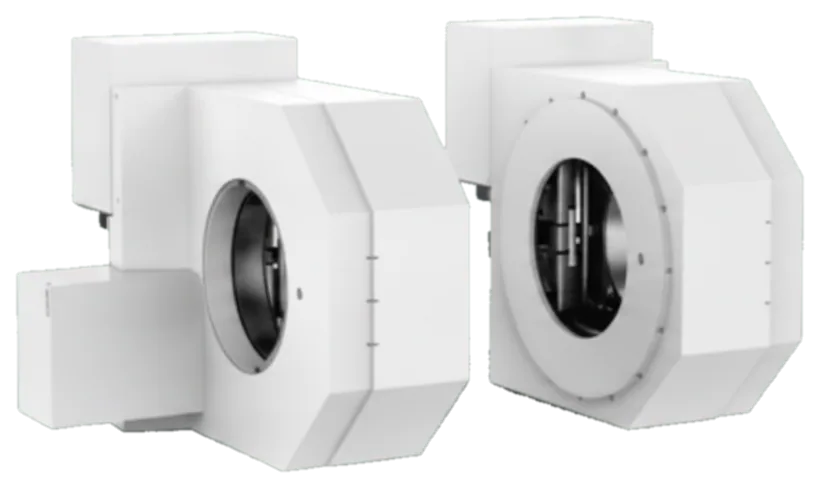
Chuck 650
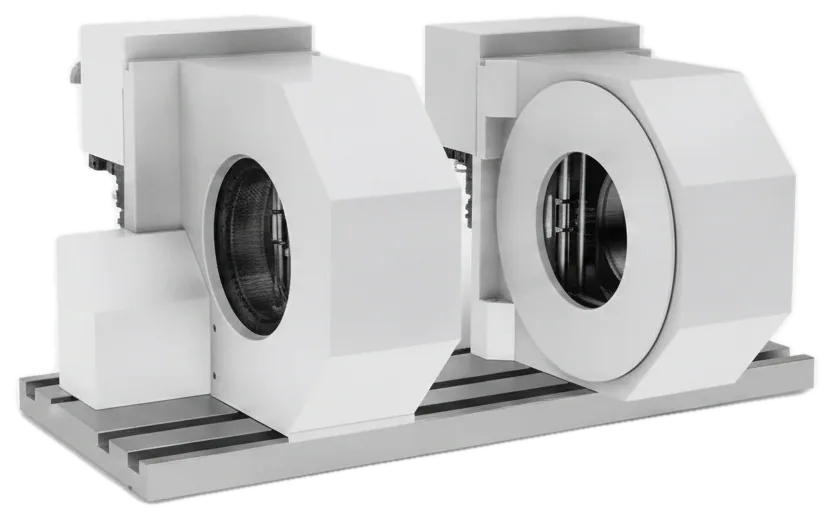
Chuck 850
Three-chuck configuration
Three heavy-duty, side-mounted chucks with a low centre of gravity make the machine run much more stably. A precision servo motor and a gear drive rotate the chucks in sync, so cutting is more precise and faster.
All three chucks are movable, and the middle one can travel to the right. This means the last part can also be cut to the same quality, with zero remnant, so less material is wasted.
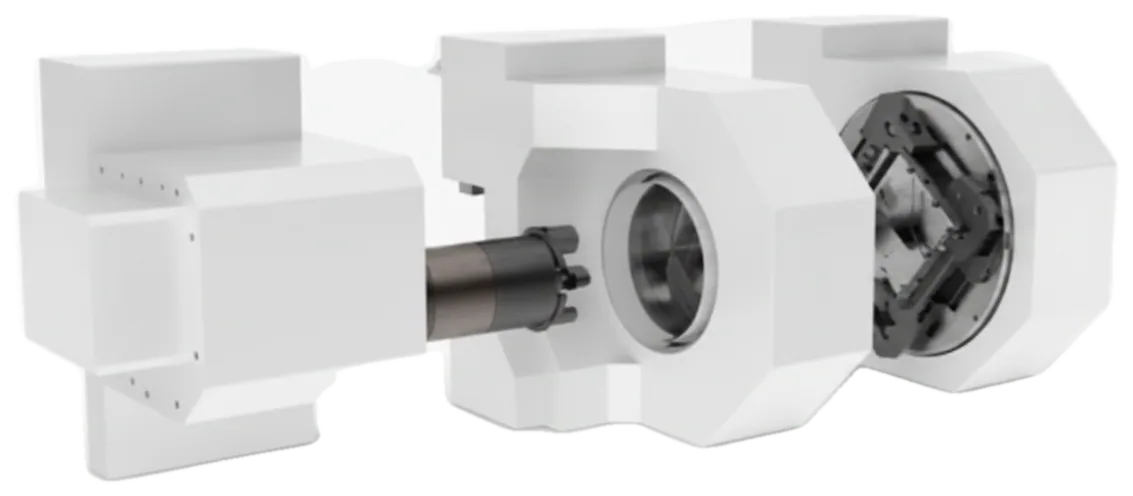
Chuck 280
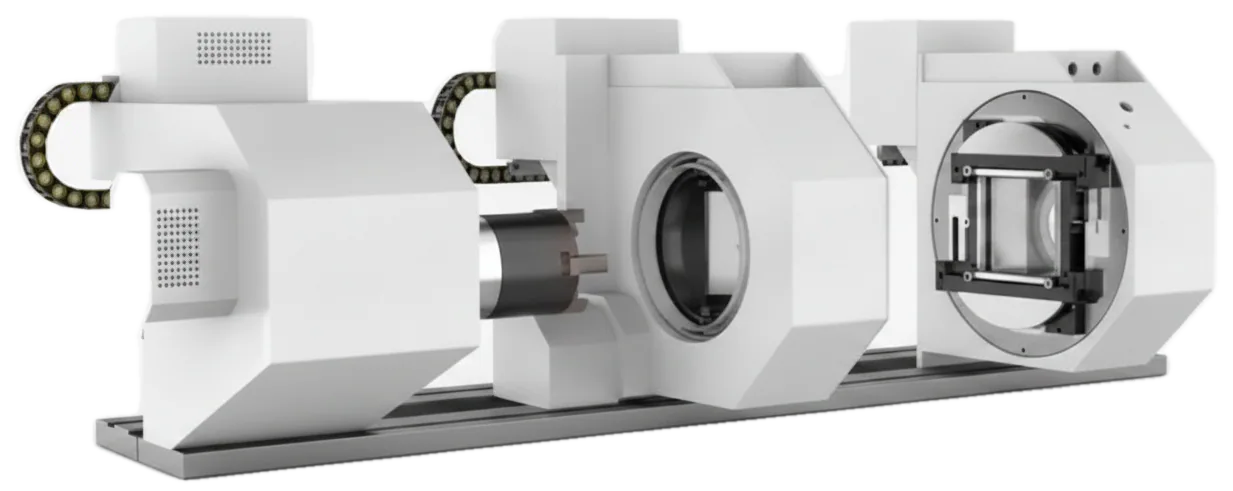
Chuck 360
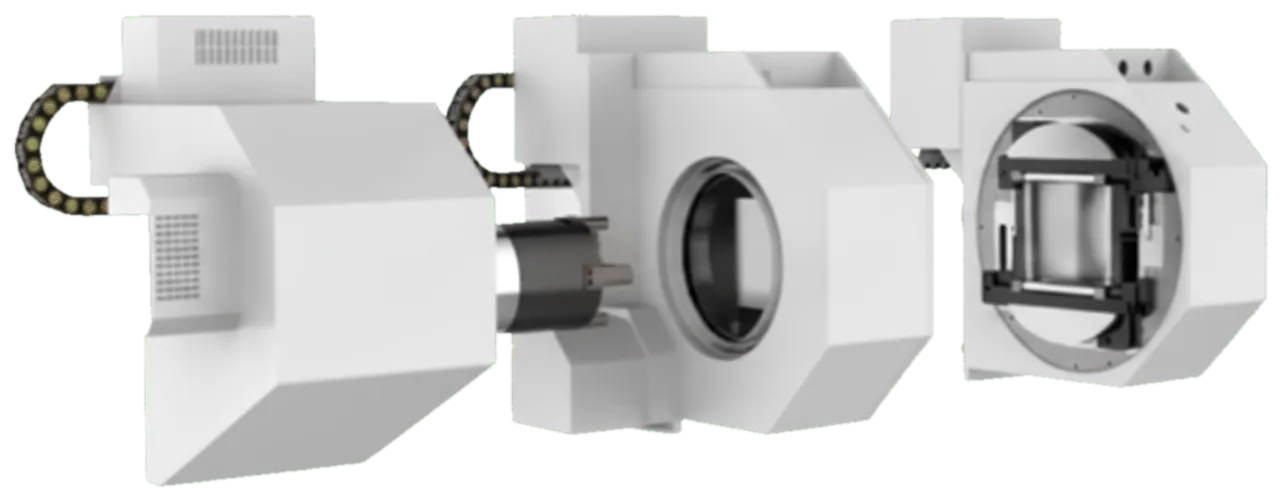
Chuck 550
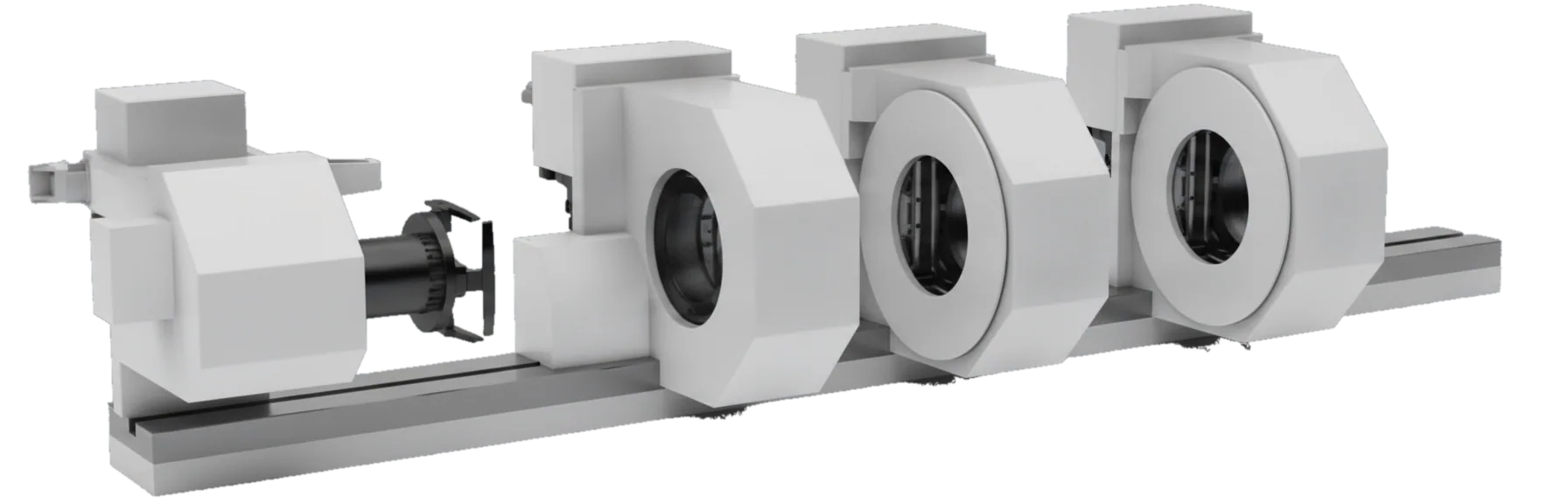
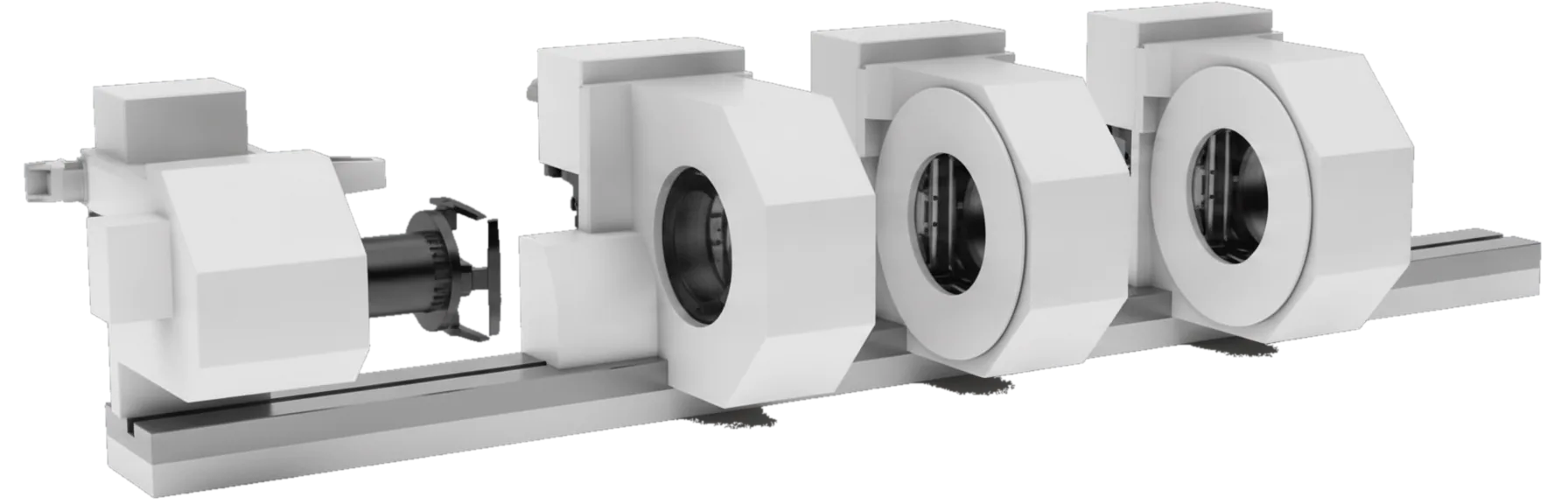
Four-chuck configuration
In the four-chuck configuration, the third and fourth chucks work together to provide double support. The loading area is supported at 4 points and takes heavier tubes.
For special processes, the part can be cut completely, with zero remnant, so less tube is wasted. Clamping at multiple points close to the cutting zone noticeably increases precision.
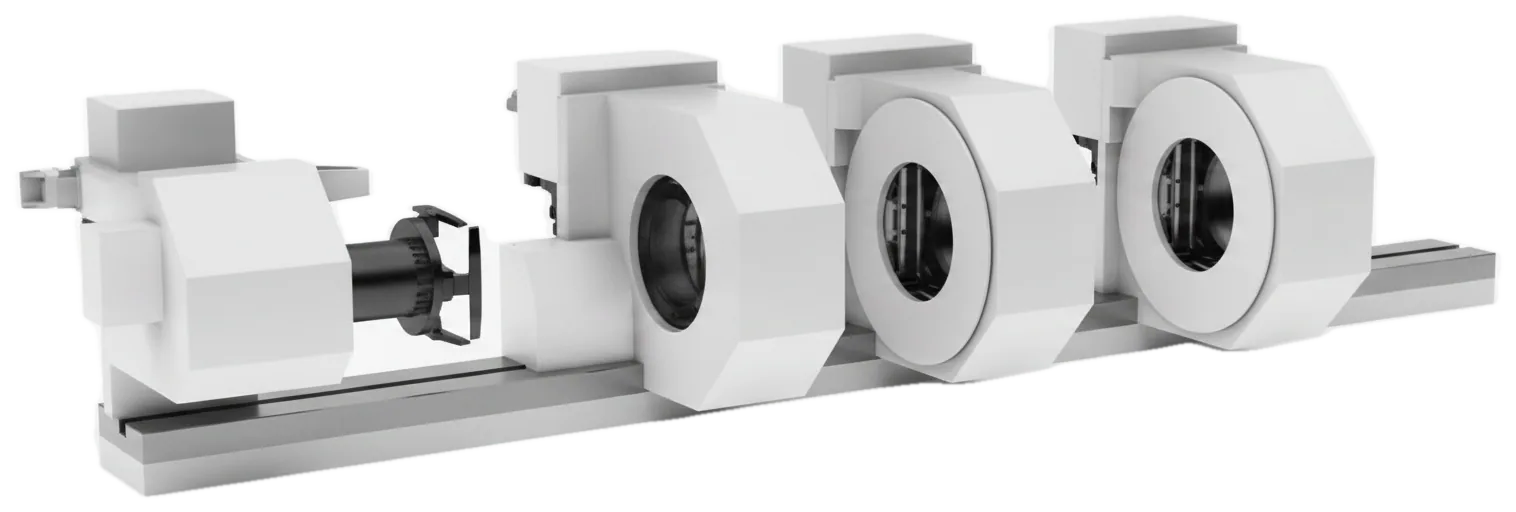
Chuck 550
Chuck 650
Chuck 850
A chuck for every diameter
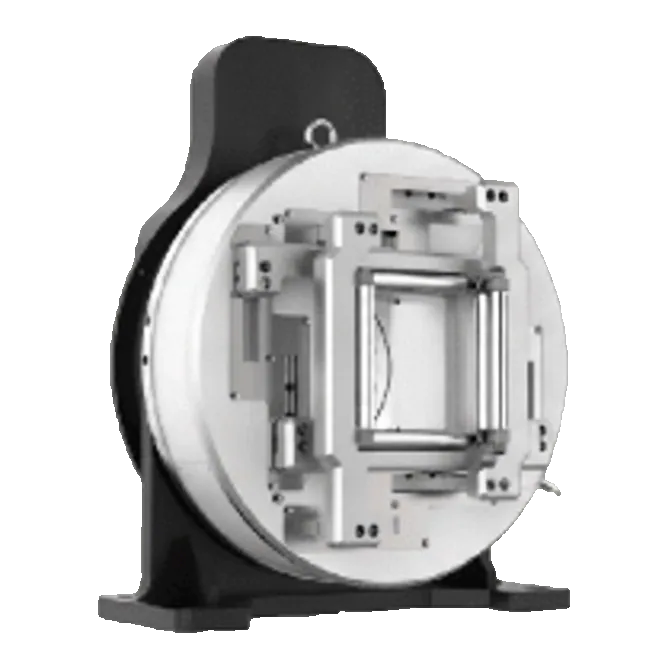
Chuck 120
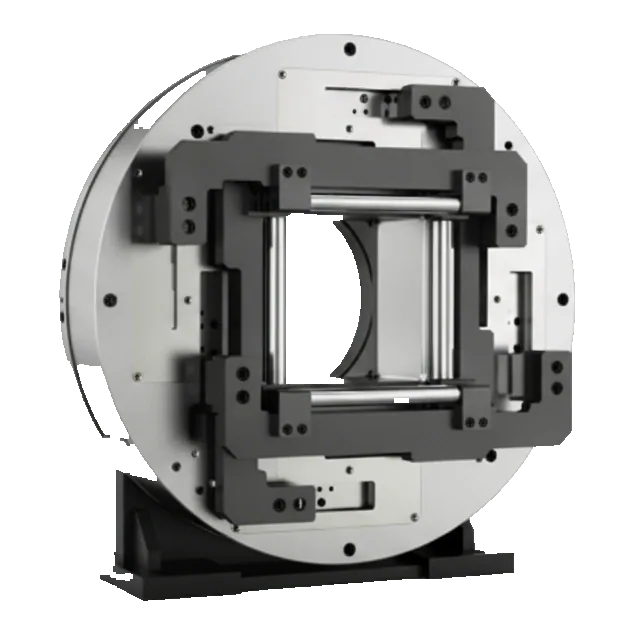
Chuck 180
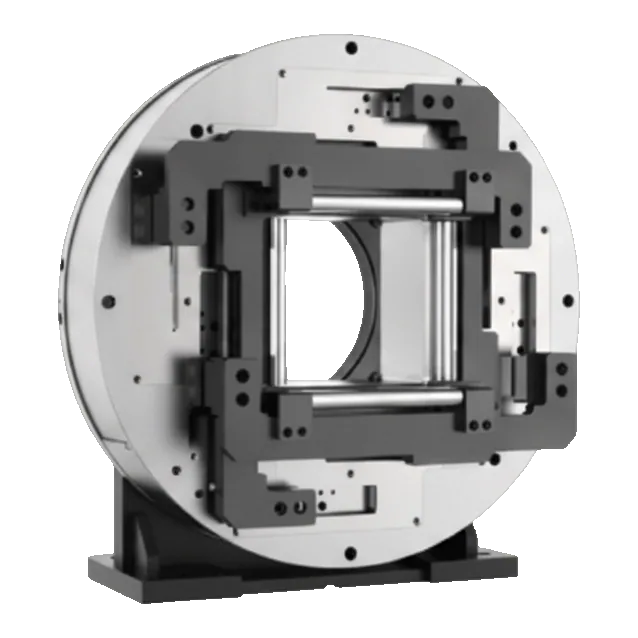
Chuck 230
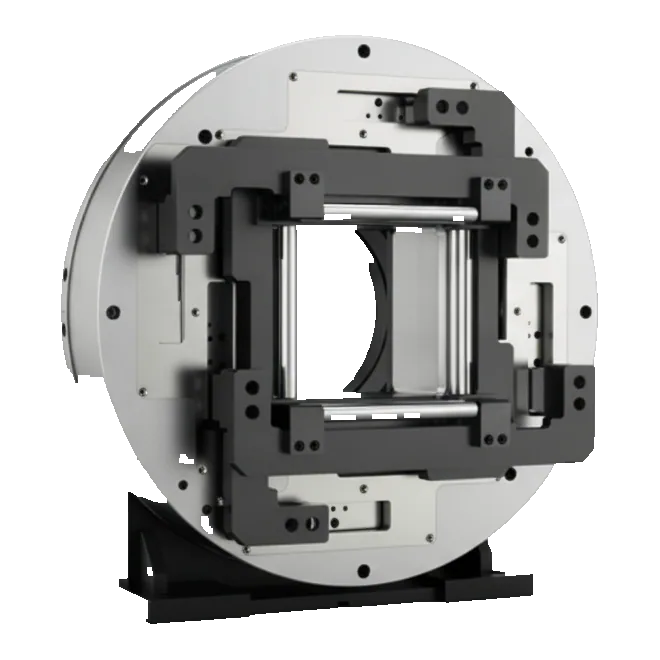
Chuck 260
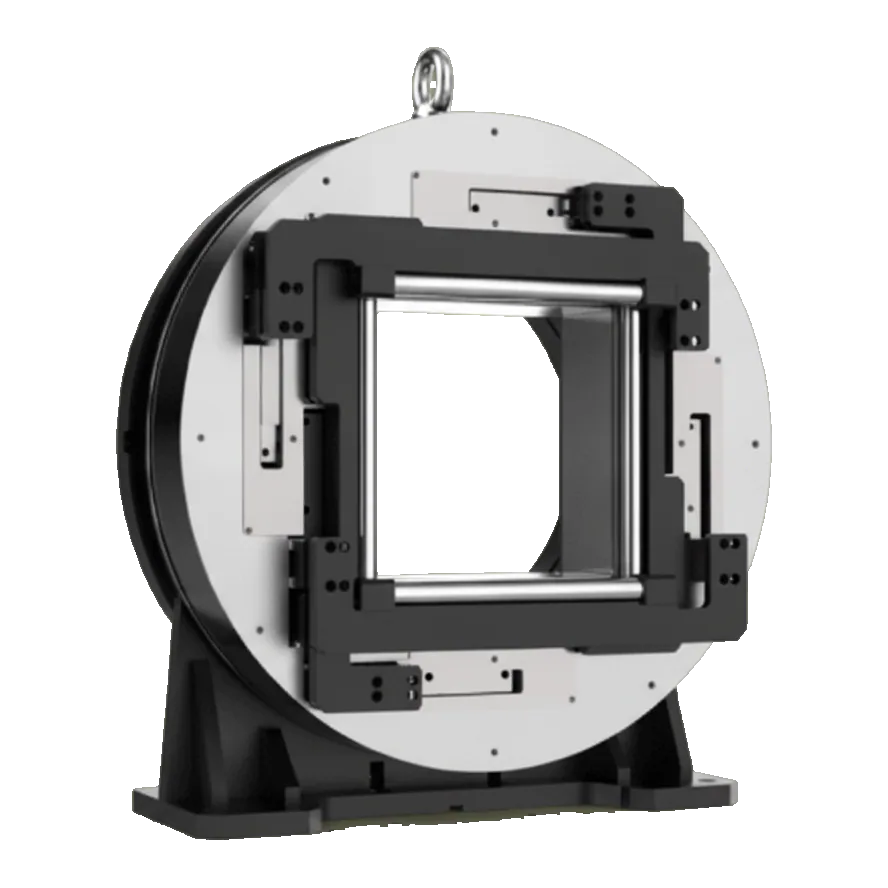
Chuck 360
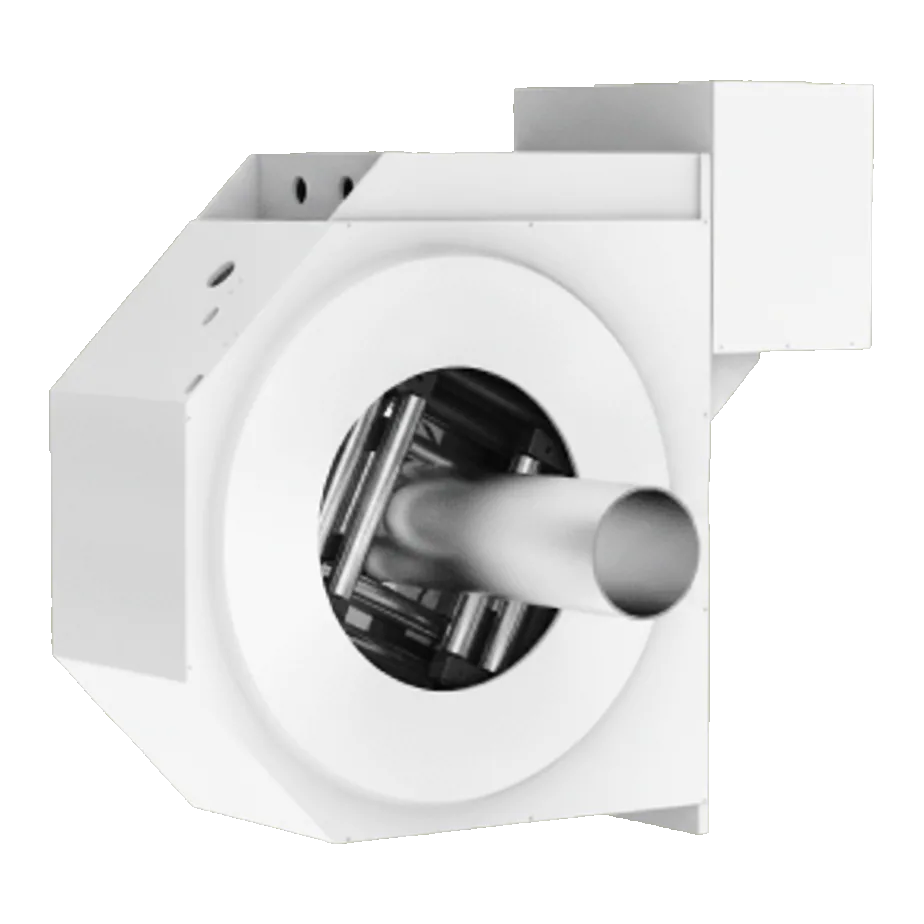
Chuck 550
High-power ±45° bevel cutting
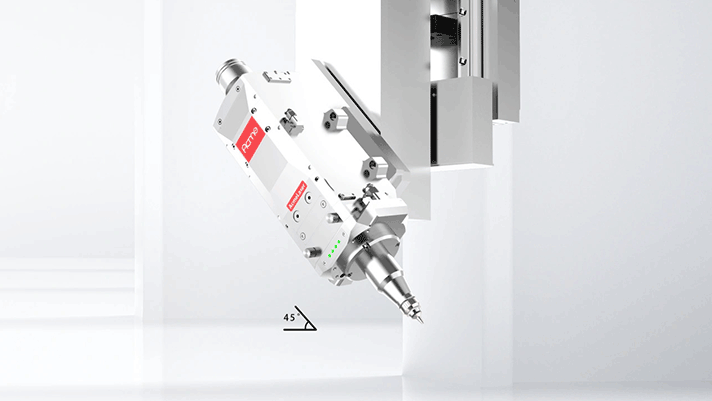
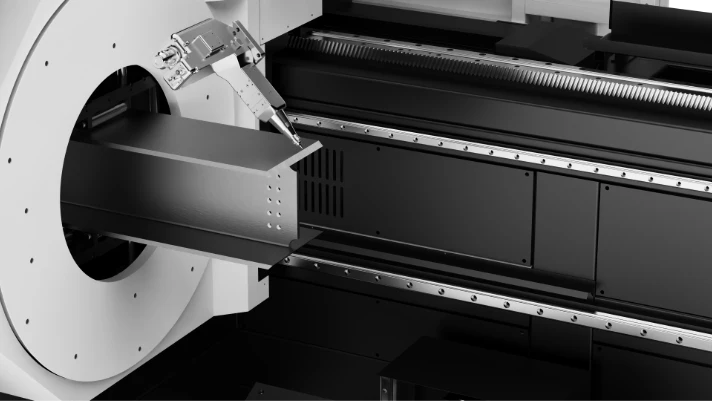
Mounted on the tilting mechanism developed by ACME, a standard laser cutting head cuts precise bevels at multiple angles, up to ±45°.
It is used both for cutting parts and for weld preparation on tubes, with no secondary machining. Less tube is wasted, bevel cutting efficiency increases and production costs fall.
Bevel cutting is widely used in industries that cut heavy tube: structural steelwork, shipbuilding, renewable energy, photovoltaics and the oil industry.
Intelligent control system
ACME developed the bevel cutting control system together with Bochu, a well-known Chinese brand in the field.
- The bevel path is generated automatically in the nesting software and cut directly on the tube.
- Dual Y-axis cutting increases precision on heavy tubes.
- Zero-remnant cutting uses the tube right to the end.
- The system works with laser sources from 12,000 to 60,000 W.
Static cutting technology
On machines with static cutting, the cutting head has a short Y-axis with a stroke of 300 mm. On heavy tubes, the tube stays still and only the head moves along it: vibration drops noticeably, precision increases and cycle times are shorter.
Energy consumption
Most noticeable with closely spaced holes, and the advantage becomes clearer the longer the machine runs.
Cutting speed
Especially on parts with many contours, which take a long time to cut.
Smoother operation
Fewer emergency stops, steadier motion, and the linear guides and rack are better protected.
How ACME technology works
Which tube diameters do ACME chucks clamp?
ACME chucks clamp tubes from 8 mm up to Ø840 mm, depending on the model. The smallest, the 120 chuck, clamps between 8 and 120 mm. The largest, the 850 chuck, takes round tubes of Ø200–840 mm and square tubes up to 590×590 mm. The 180, 230, 260, 280, 360, 550 and 650 chucks cover the sizes in between; each model's range is shown above.
What is the advantage of the ACME full-stroke chuck?
The ACME full-stroke chuck clamps across its entire range without changing jaws, which saves production time. It is pneumatic, developed by ACME, and has eight cylinders, which give it twice the clamping force of a standard chuck. It can hold metal tubes and profiles weighing up to 4 tonnes and up to 15 metres long; the maximum workpiece weight and length for each machine are listed in its technical specifications.
When should I choose a 3- or 4-chuck ACME machine?
Choose the ACME three-chuck configuration when the last part in the tube matters too: the middle chuck travels to the right, and the end part comes out at the same quality, with zero remnant. The chucks have a low centre of gravity and rotate in sync. The four-chuck configuration adds double support from the third and fourth chucks, plus 4-point support during loading, for special processes that require the part to be cut completely.
What is ±45° bevel cutting on ACME machines and what is it for?
±45° bevel cutting means the ACME machine cuts the tube edge at an angle, up to 45° in either direction, using a standard laser cutting head mounted on the tilting mechanism developed by ACME. The bevel path is generated automatically in the nesting software and cut directly on the tube. It is used for cutting parts and for weld preparation, with no secondary machining: less tube is wasted and production costs fall.
What are the benefits of static cutting on ACME machines?
In static cutting, on the ACME machines that offer it, the heavy tube stays still and only the cutting head moves along it, on a short Y-axis with a 300 mm stroke. Tube vibration drops, precision increases and cycle times are shorter. ACME states 60% lower energy consumption, most noticeable with closely spaced holes, and 20% higher cutting speed on complex parts, plus fewer emergency stops.
Want to see this technology in action?
Visit us in Cluj-Napoca to see the heavy-duty chuck, ±45° bevel cutting and static cutting on an ACME machine used every day in our own production facility.
or by email: office@acmelaser.ro